
Search Minnesota Felony Records
Minnesota felony records are held by the Bureau of Criminal Apprehension, District Courts, and the Department of Corrections. You can search for felony case data through the state's free online tools or go to a county courthouse in person. The BCA runs a public criminal history search that shows conviction data for all 87 counties. Minnesota Court Records Online lets you look up case filings, hearing dates, and docket entries by name or case number. If you need a full case file or a certified copy of a conviction record, contact the Court Administrator in the county where the case was filed.
Minnesota Felony Records Overview
Minnesota BCA Felony Records Search
The Bureau of Criminal Apprehension is the main state agency for felony records in Minnesota. The BCA runs the Criminal History System, which is the central place for data on people arrested for felony and gross misdemeanor crimes. Public conviction data is free to search on their site. You can look up a name and see the offense, date of conviction, court, sentence, and level of the charge. The system goes back to 1986 and covers every county in the state.
The BCA public criminal history search shows conviction records that are less than 15 years past the end of the sentence. That is what counts as public data under Minnesota Statute 13.87. Private data like arrest records, juvenile files, and out-of-state hits do not show up in the public search. If you need a full criminal history on someone else, you must send a notarized Informed Consent Form signed by that person along with a $15 fee to the BCA office at 1430 Maryland Avenue East in St. Paul.
The BCA also offers criminal history checks at its office in person. Walk-in hours are 8:15 a.m. to 4:00 p.m., Monday through Friday. You can view your own record for free. A printed copy costs $8. For nonprofits with a 501(c)(3) letter, the fee drops to $8 as well.
You can learn more about the BCA criminal history program on the BCA Criminal History Information page. It walks through what data is public, how to make a request, and what forms you need.
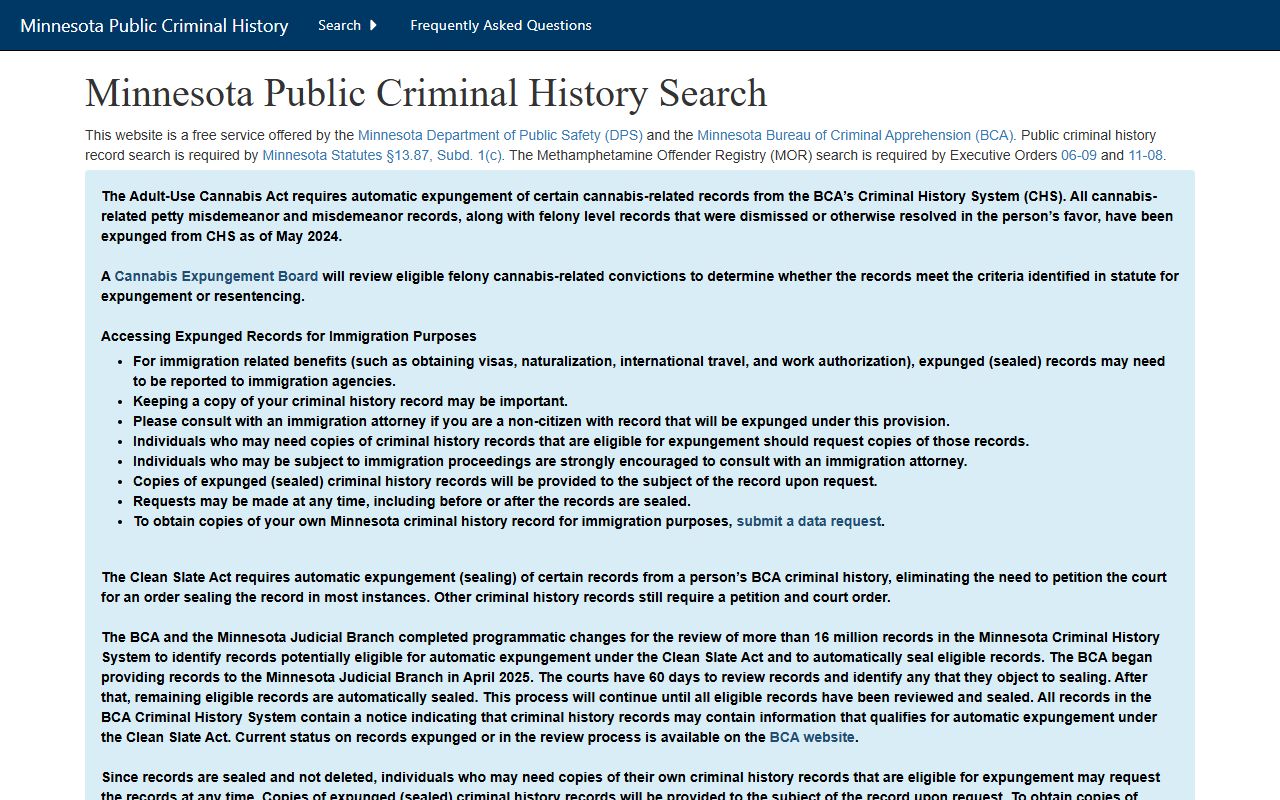
The screenshot above shows the BCA's public search tool. You can type in a name and get results right away for any public felony conviction in the state.
For more details on how the search works and what you can expect to find, the BCA search information page has a full breakdown of the process.
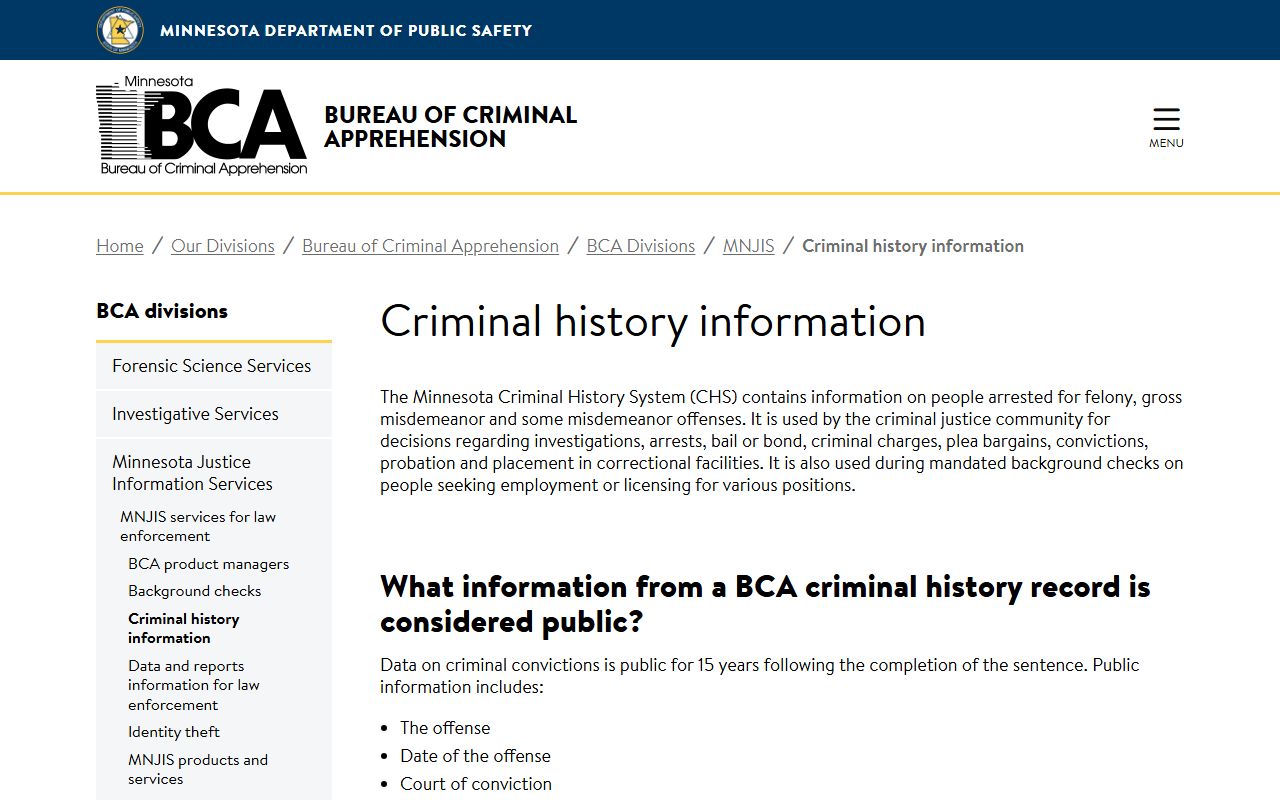
This page spells out the rules for who can see what. It also covers how to get records for immigration cases and what nonprofits need to send in.
Minnesota Court Felony Case Records
Every felony case in Minnesota goes through a District Court. The state has 87 counties split across 10 judicial districts. Each court keeps its own case files. The Minnesota Court Records Online system lets you search those files from any county. You can look up cases by name, case number, or attorney. The system shows party names, case status, hearing dates, and docket entries for criminal cases where a conviction was entered.
MCRO has public documents for cases filed on or after July 1, 2015. Older judgments and orders going back to 2005 are also in the system. Not everything shows up online though. Pre-conviction data only shows at courthouse terminals. Civil commitment, domestic abuse, and harassment cases are excluded.
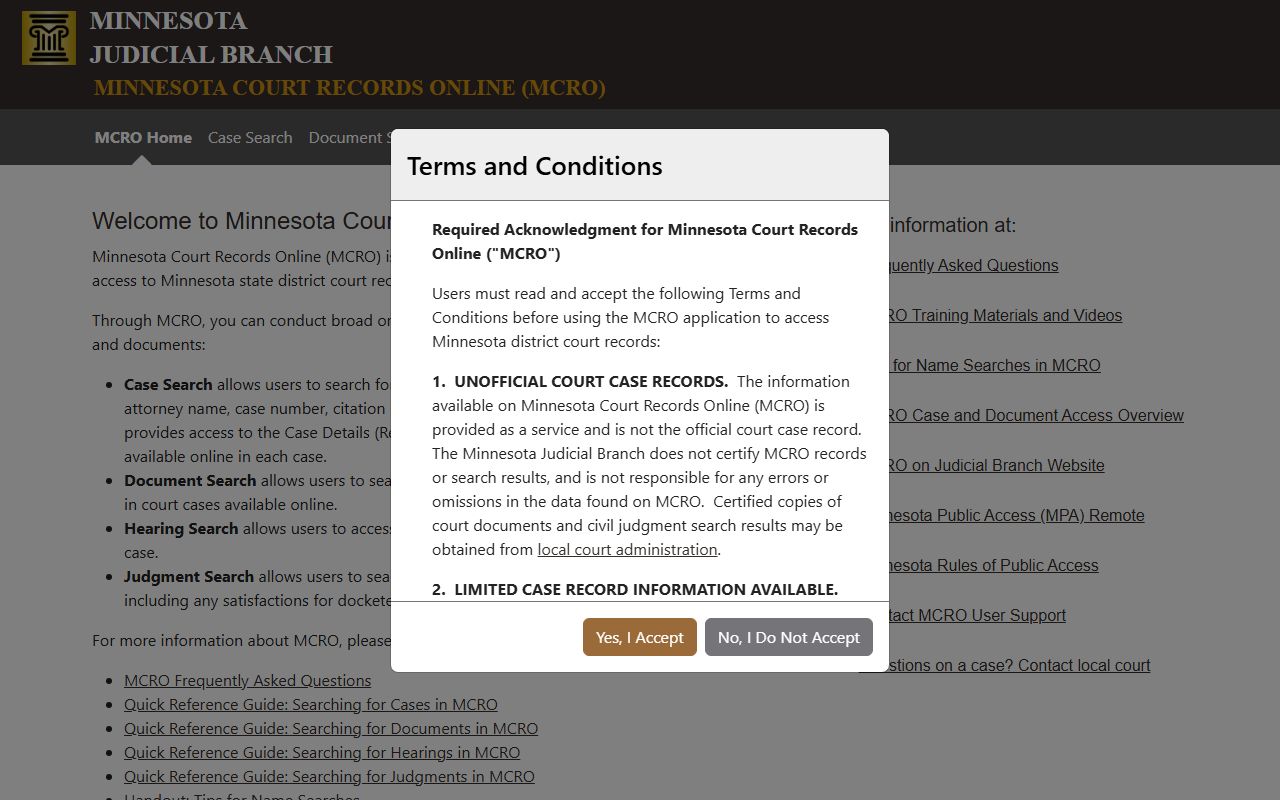
The MCRO homepage above is where you start a search. Pick the search type and enter a name or case number to find felony records from any county in the state.
Under Minnesota Statute 13.82, arrest data and response data from law enforcement are generally public. Active investigations stay private. Once a case reaches the court, the Rules of Public Access to Records of the Judicial Branch control what you can see. Most felony case documents are open to the public. You do not need to be a party to the case or give a reason for your request under Statute 13.03.
The MCRO info page on the Minnesota Judicial Branch site explains the system in more detail. It lists what types of records are available and what limitations apply to each search type.
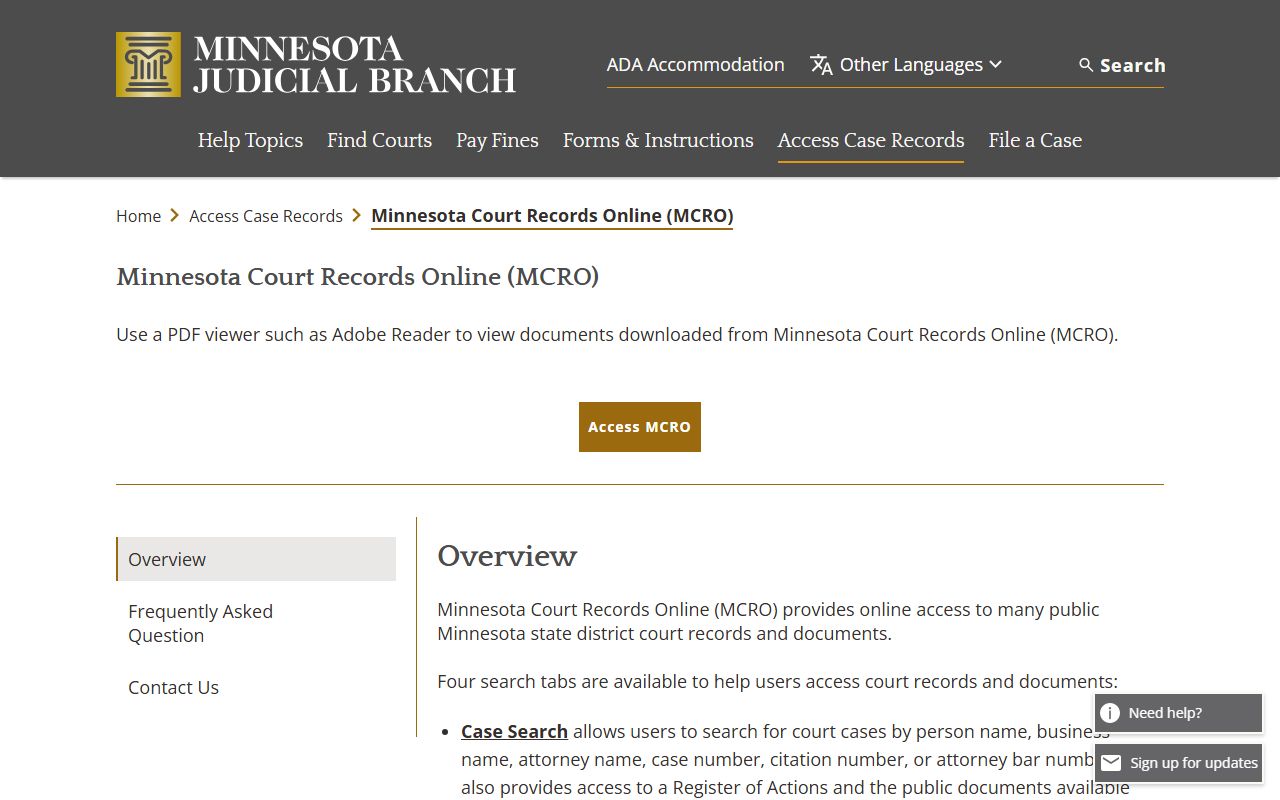
This page breaks down case search, document search, hearing search, and judgment search options so you know which tool fits your needs.
Minnesota DOC Felony Records
The Minnesota Department of Corrections keeps records on people convicted of felonies who serve time under state supervision. Their Offender Locator lets you search for anyone who has been in DOC custody since 1979. That includes people still locked up and those who served their time and left. The search shows public data like the offense, sentence length, and facility location.
The DOC also runs searches for Level 3 sex offenders, wanted fugitives, and non-compliant registrants. If someone violated their supervised release, the DOC keeps a fugitive list. You can call their 24-hour tip line at 651-603-0026 to report information about a fugitive. For victim services, Minnesota Haven sends custody status updates so you know when an offender moves or gets released. The VINE notification system also provides alerts.
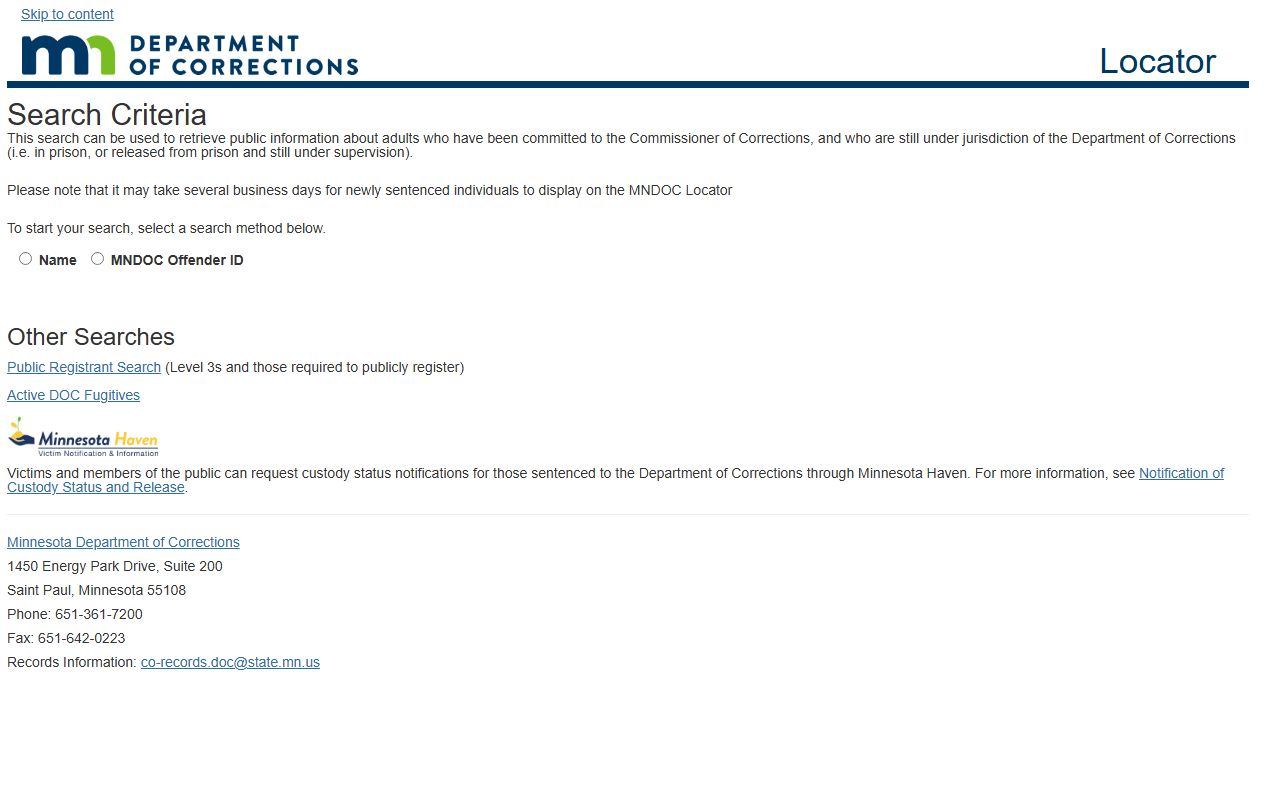
The DOC search tool shown above covers current and past inmates. Keep in mind that probation data after October 1998 is not in this system. If a person served probation only, they may not show up here.
What Counts as a Felony in Minnesota
Under Minnesota Statute 609.02, a felony is any crime that can bring a prison sentence of one year or more. Gross misdemeanors carry up to one year and a $3,000 fine. Regular misdemeanors max out at 90 days and $1,000.
Minnesota also has a specific list of "crimes of violence" defined in Statute 624.712. These carry extra penalties, including lifetime loss of firearm rights under Statute 624.713. The crimes of violence definition reaches into 19 other statutes and affects everything from pardons to data practices. Not all offenses on the list involve physical harm. Some financial crimes and drug offenses end up on the list too, which can catch people off guard. Felony record retention in Minnesota follows Statute 138.17. Murder case files stay on record forever. All other felony files last 50 years after case closure. Gross misdemeanors get 25 years. Misdemeanors get 10.
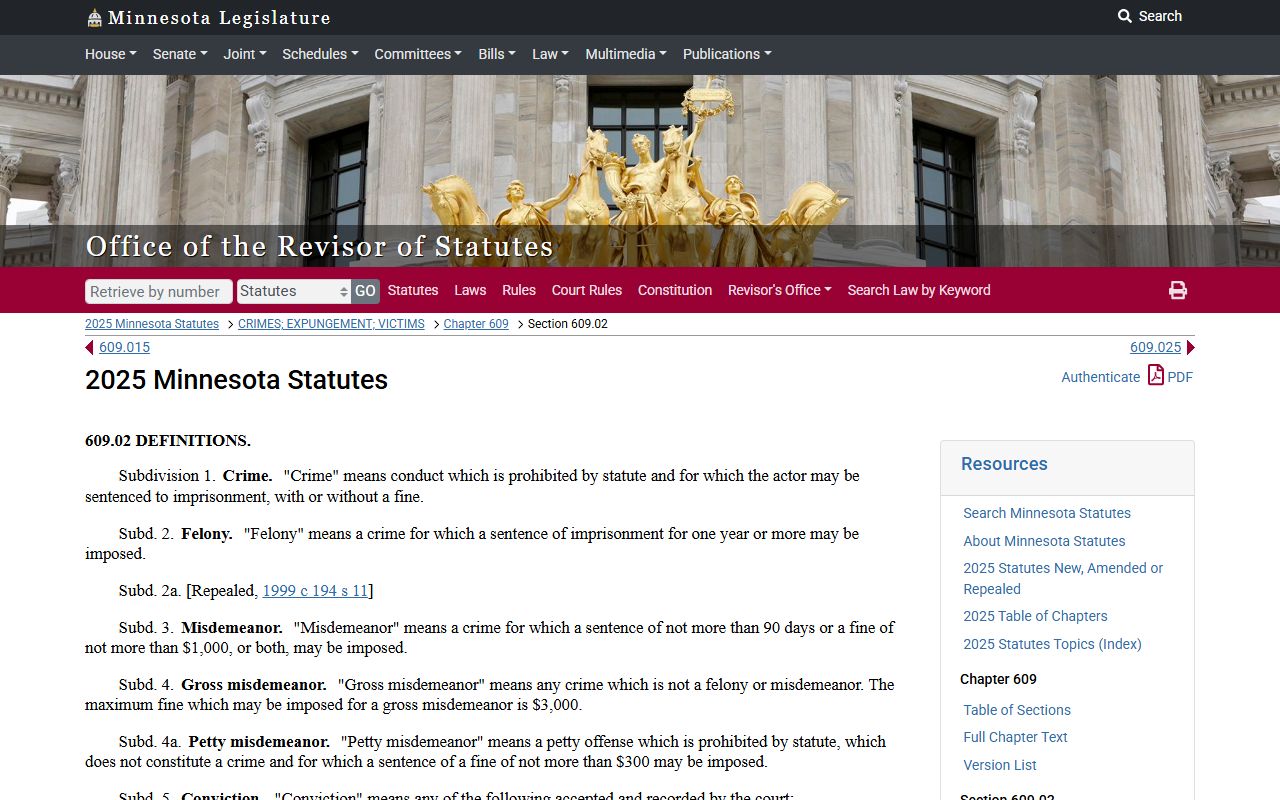
The statute page above lays out each crime level and what sentence ranges apply. It is the starting point for understanding how Minnesota classifies felony records.
Minnesota Felony Record Expungement
Minnesota passed the Clean Slate Act, which took effect on January 1, 2025. Under Statute 609A.015, certain felony records now qualify for automatic expungement. The BCA identifies people who meet the requirements and starts the process. There is a 60-day review window for the courts. If no one objects, the records get sealed. The BCA does not have to tell you when your record becomes eligible or when it gets sealed.
For felony convictions, the waiting period is five years from the end of the sentence. Drug possession convictions under Section 152.025 have a shorter wait of four years. Dismissed charges and acquittals get sealed with no wait at all. Violent crimes, sex offenses that need registration, and crimes against persons are not eligible for automatic expungement. Cannabis-related misdemeanor and petty misdemeanor records were expunged as of May 2024. A Cannabis Expungement Board reviews eligible felony cannabis cases separately.
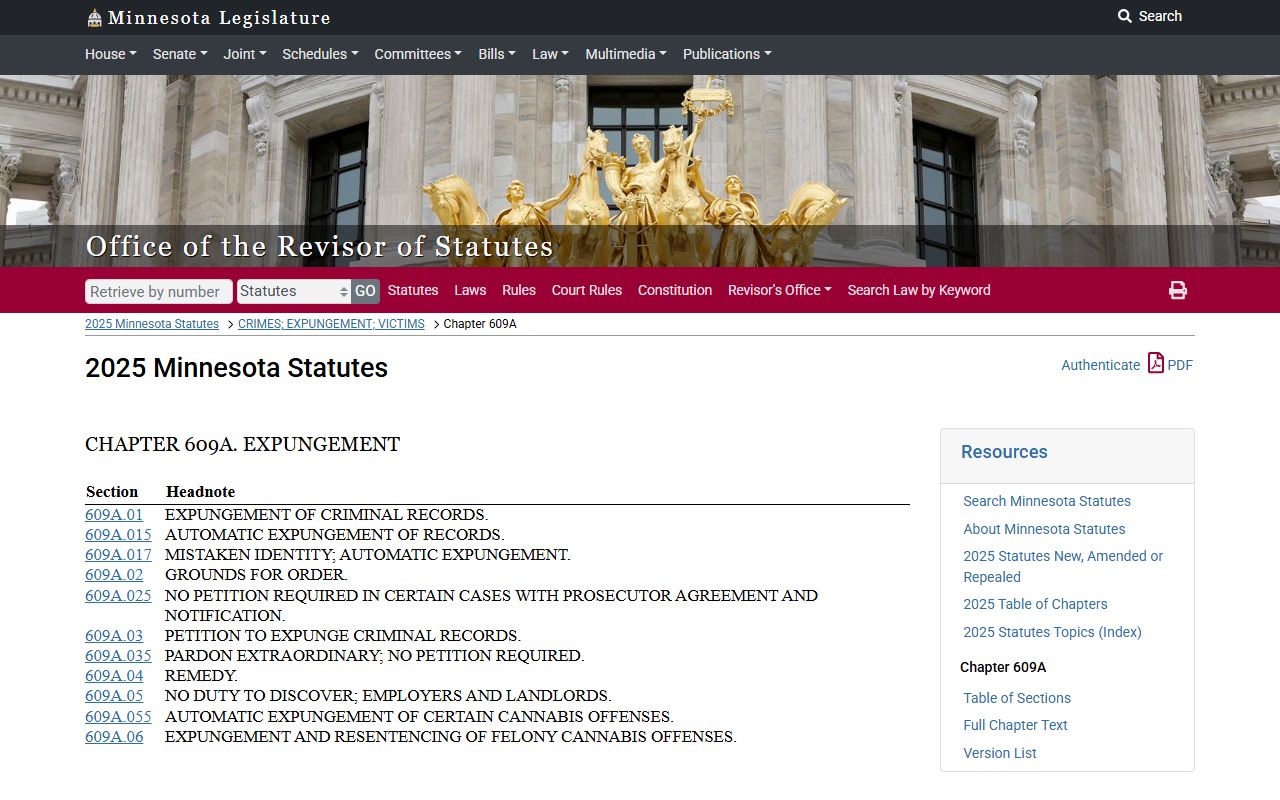
The full text of the expungement law is on the Minnesota Revisor of Statutes website, shown above. It covers both automatic and petition-based expungement paths.
If your record does not qualify for automatic sealing, you can still petition the court under Statute 609A.02. Certain felony drug and fraud convictions are eligible. The Minnesota Judicial Branch has expungement forms on its website. Help Seal My Record is another resource built to walk people through the process step by step.
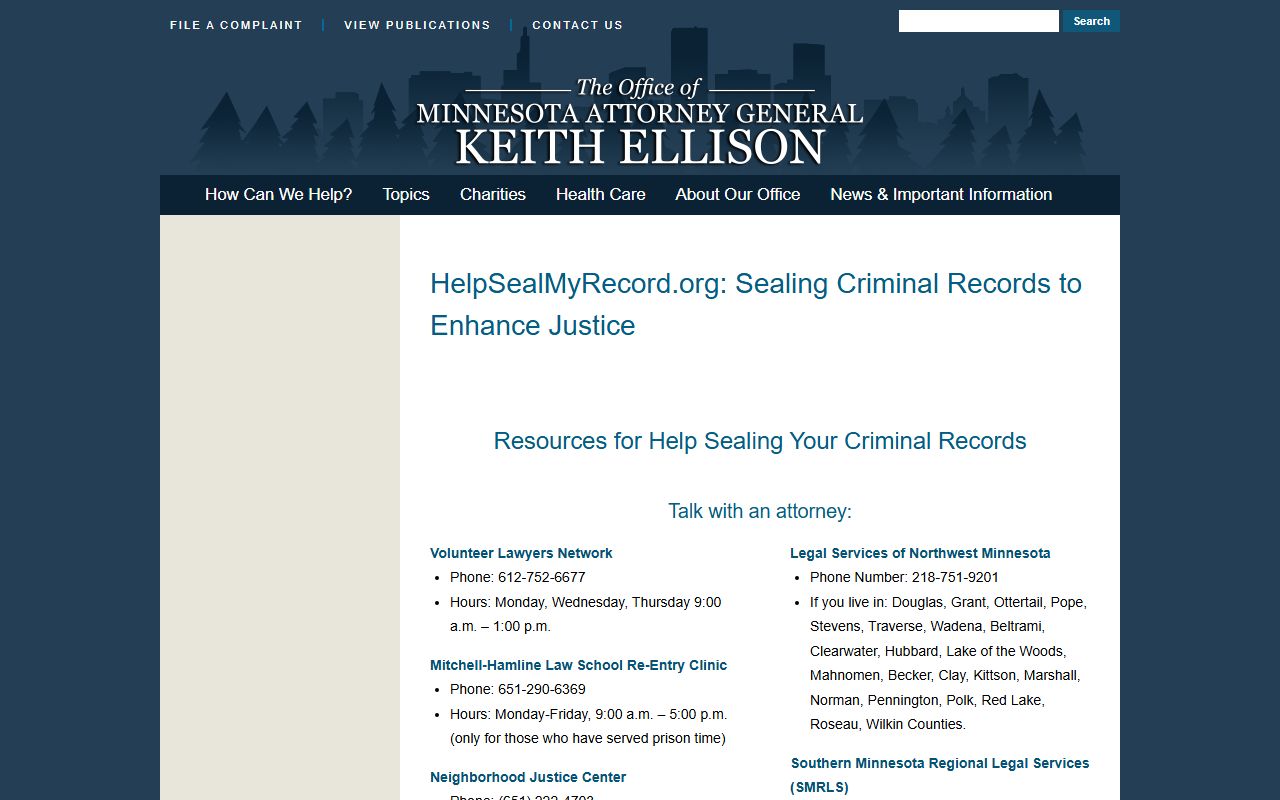
The Help Seal My Record site shown here provides free tools to check if you qualify and guides you through each stage of a petition.
More Ways to Access Felony Records
Beyond the BCA and MCRO, Minnesota has a few more paths to felony records. The Minnesota Public Access Remote system is an older tool that still works for some searches. It is being phased out in favor of MCRO, but you can still use it to look up case data in some counties. Every courthouse also has public access terminals you can use for free. These give more detail than the online tools, including pre-conviction data that does not show up on MCRO.
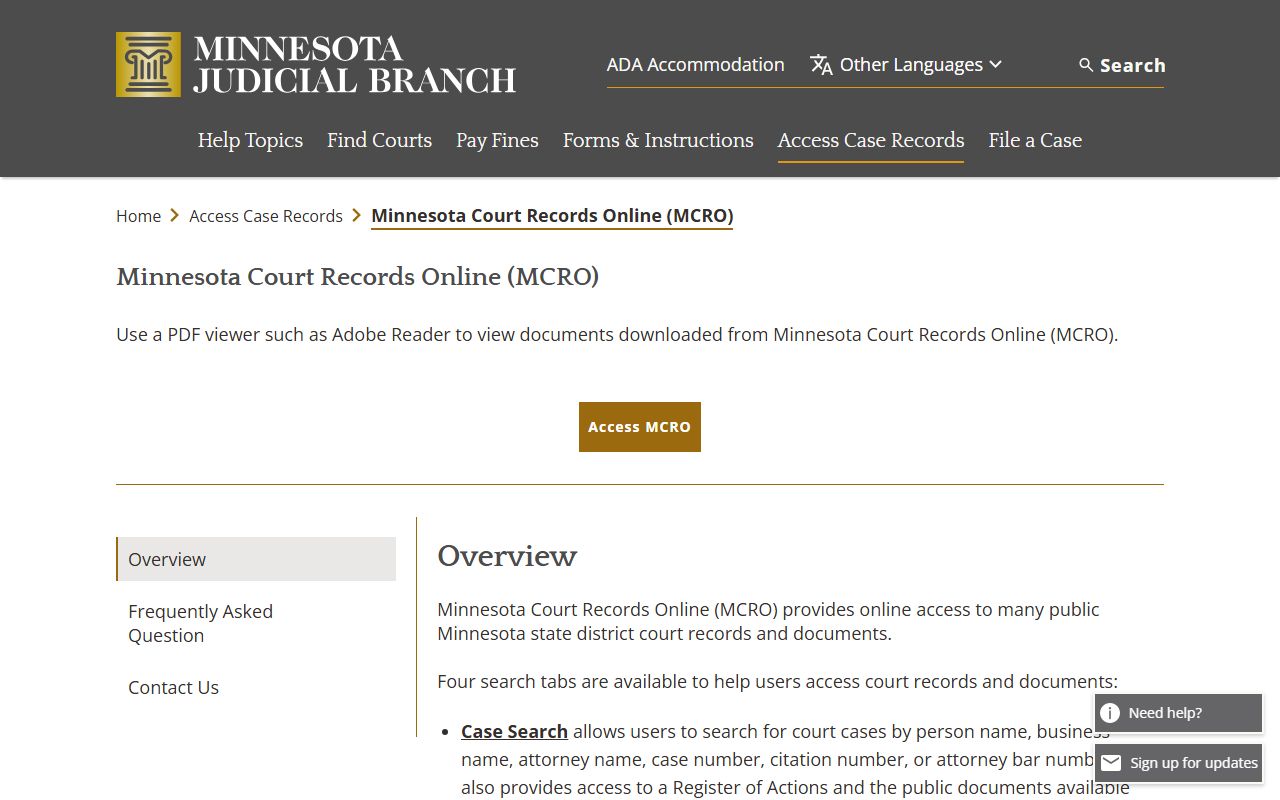
The MPA Remote page above explains how the legacy system works and what data you can pull from it.
Sheriffs across the state also keep their own records. Under Statute 641.08, each sheriff must track everyone booked into the county jail. Many counties post jail rosters online. These show who is in custody, what they are charged with, and bail amounts. For broader questions about data access rights, the Minnesota Attorney General's office handles consumer protection and can point you to the right agency. LawHelpMN is a free resource that connects people with legal information across the state.
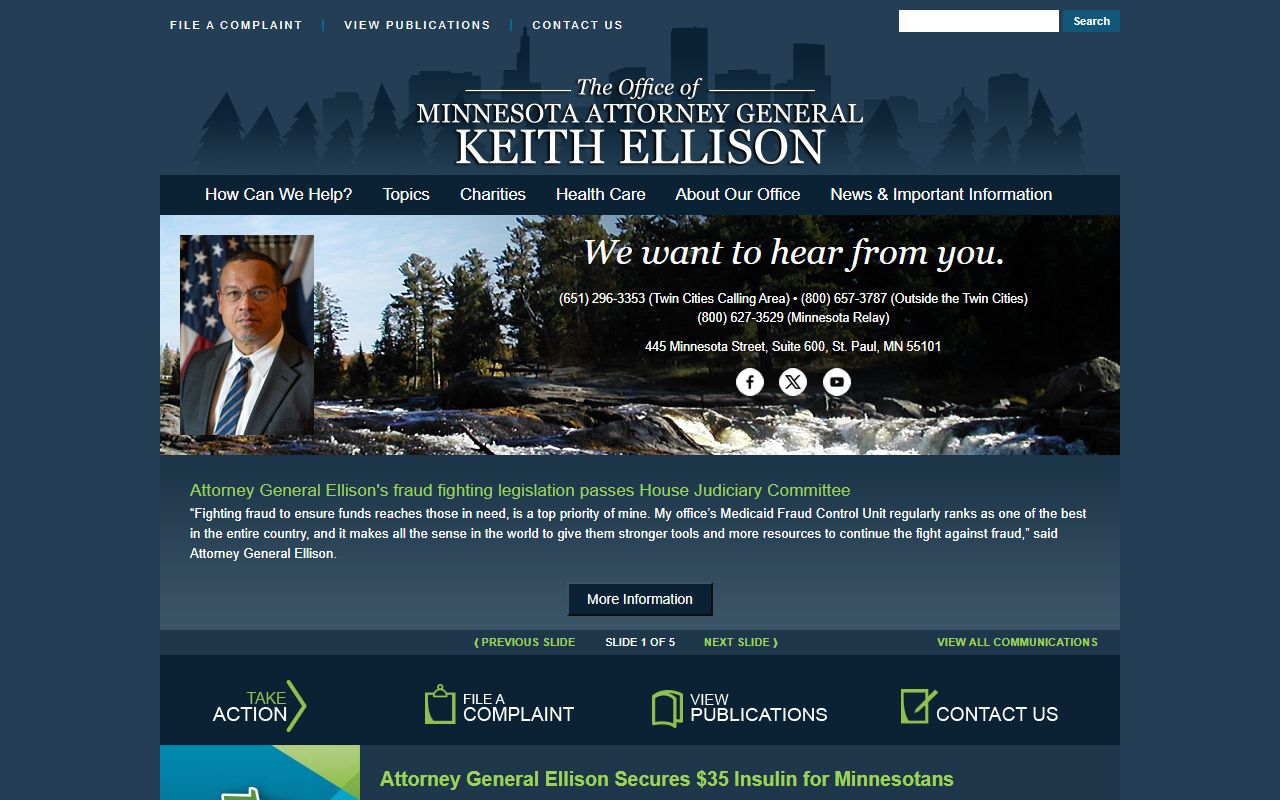
The Attorney General's site covers a range of legal topics and can direct you to the right state office for records requests.
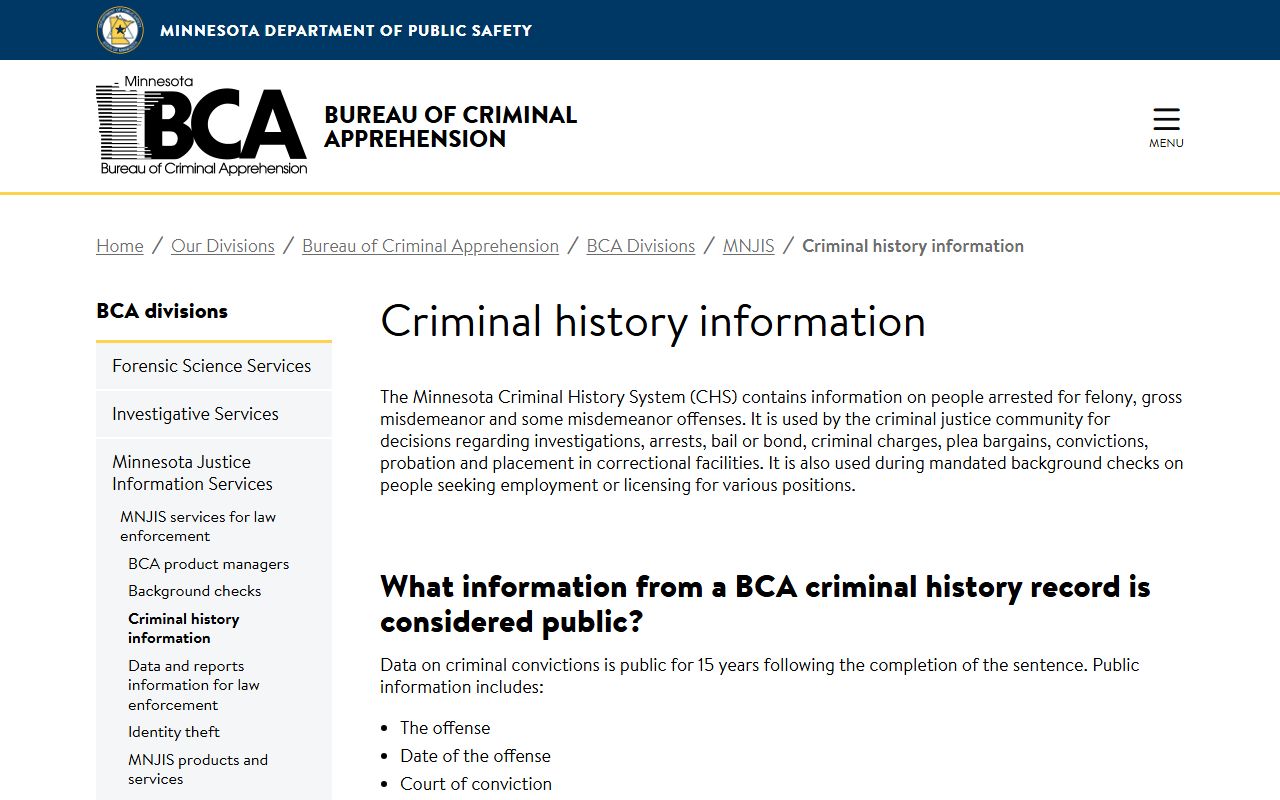
The BCA info page above is a good starting point if you are not sure which search tool to use. It links to all the main databases and explains what each one covers.
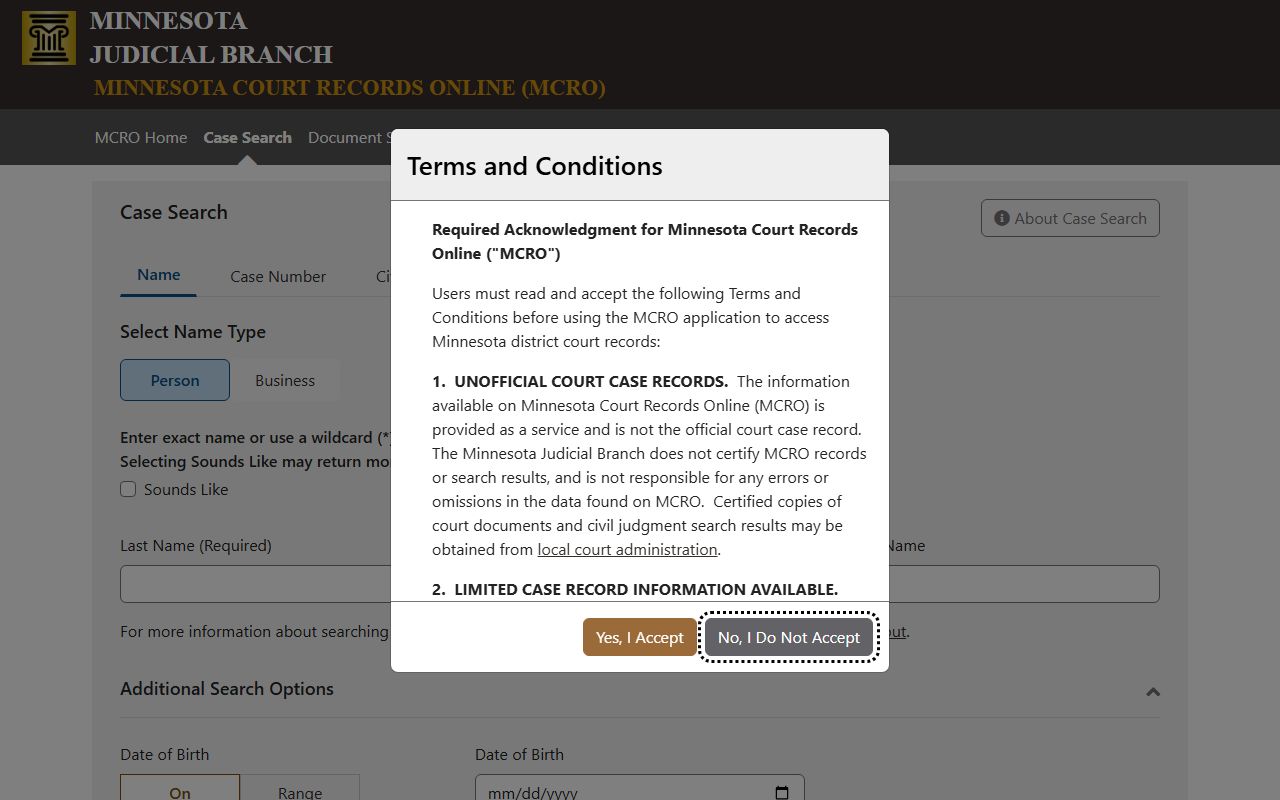
The MCRO case search form lets you filter by county, case type, and date range to find specific felony filings across the state.
Browse Minnesota Felony Records by County
Each of Minnesota's 87 counties has a District Court and sheriff's office that handle felony cases. Pick a county below to find local contact info, jail rosters, and resources for felony records in that area.
Felony Records in Major Minnesota Cities
City residents search for felony records through their county's District Court and sheriff's office. Pick a city below to find out which county handles felony cases in that area.