
Lac qui Parle County Felony Records
Lac qui Parle County felony records are kept at the District Court and the Sheriff's Office in Madison. This rural county in western Minnesota handles a small but steady number of criminal cases each year. You can search for felony case data through the state court system or by reaching out to local offices. The county falls in the 8th Judicial District, which serves several counties in this part of the state. If you want to look up a felony case from Lac qui Parle County, start with the free online tools the state provides or call the court clerk for help with older files that may not show up in the digital system.
Lac qui Parle County Overview
Lac qui Parle County Sheriff
The Sheriff's Office in Lac qui Parle County is the main law enforcement agency for the area. They handle arrests, book suspects, and send case files to the county attorney for review. When a felony arrest takes place, the sheriff creates a report that goes into the state criminal history system run by the BCA. You can reach them by phone or stop by in person.
Lac qui Parle County is a small county, so the sheriff's staff handles most calls across the whole area. They work with the state patrol on highway incidents and cooperate with nearby counties on bigger cases. Arrest data from this office feeds into the statewide system, where it gets linked to court outcomes later on.
| Office | Lac qui Parle County Sheriff's Office |
|---|---|
| Phone | (320) 598-3720 |
| County Seat | Madison, MN |
| Website | lqpco.com |
Search Lac qui Parle Felony Cases
The best way to look up felony records in Lac qui Parle County is through the state's online tools. The Minnesota Court Records Online system lets you search by name or case number for free. It pulls up case info from all 87 counties, including Lac qui Parle.
You can also run a check through the BCA Criminal History Search site. This tool shows public conviction data for felonies, gross misdemeanors, and some misdemeanors. Under Minnesota Statute 13.87, conviction data is public for 15 years after the sentence is done. After that window closes, the data moves to a private status and is no longer shown on the free site.
For older records or cases that don't show up online, call the Lac qui Parle County District Court at (320) 598-3536. Staff can search their local files and help you get copies. In-person visits work too. The court is open on weekdays during normal business hours.
Note: Some felony records may be sealed through the expungement process and will not appear in any search.
Lac qui Parle County District Court
The District Court in Madison handles all felony cases filed in Lac qui Parle County. It sits in the 8th Judicial District along with several other rural counties in this region. Felony charges go through this court from the first hearing through sentencing. The court clerk keeps all case files and can give you copies if you ask.
Felony cases in Lac qui Parle County follow the same process as the rest of the state. A charge gets filed by the county attorney. The defendant appears for an arraignment. Then the case moves to a pretrial phase and, if no plea deal is reached, goes to trial. Under Minnesota Statute 609.02, a felony is any crime where the sentence can be more than one year in prison. The court keeps these records for decades. Murder case files stay on file forever, while other felony records are kept for at least 50 years after the case closes.
| Court | Lac qui Parle County District Court |
|---|---|
| Phone | (320) 598-3536 |
| District | 8th Judicial District |
Felony Expungement in Lac qui Parle County
Some people with felony records in Lac qui Parle County may be able to get those records sealed. Minnesota's expungement law is found in Chapter 609A of the state statutes. It lets people petition the court to seal their criminal records under certain conditions. Not all felonies qualify, and the waiting period depends on the type of offense.
For most felony convictions, you must wait five years after the sentence is complete before you can file. Some violent crimes have longer wait times or are not eligible at all. The petition gets filed in the same court where the conviction happened, so for Lac qui Parle County cases, that means the District Court in Madison. The Help Seal My Record site has free tools to check if you qualify and can help you fill out the right forms.
Note: Expungement does not erase the record; it seals it from public view.
Lac qui Parle County Criminal Records Access
The BCA runs the state's main criminal history database. You can search it for free at the Criminal History Search portal. This tool covers all Minnesota counties, including Lac qui Parle.
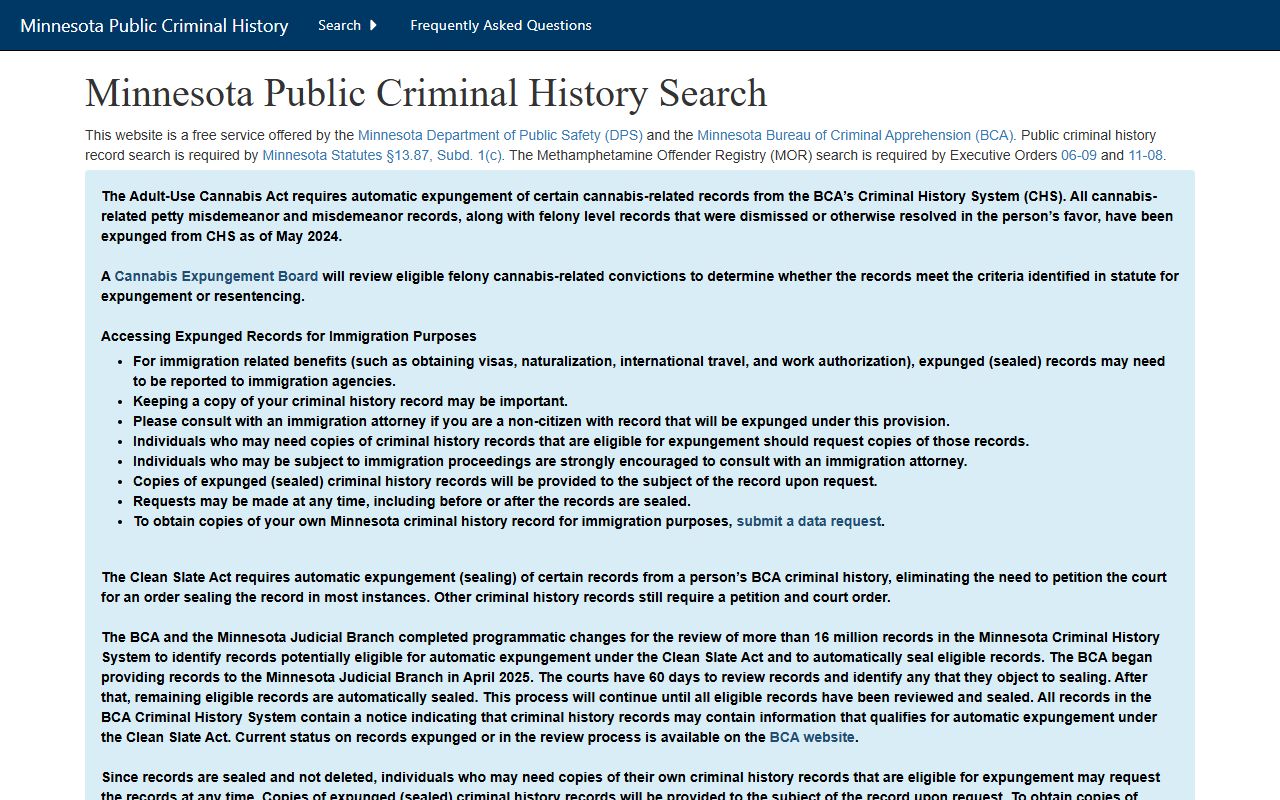
The search pulls up public conviction data based on name and date of birth. It shows the offense, court of conviction, and sentence details. For more detailed case information, use the court records system or contact the court clerk directly.
Legal Help in Lac qui Parle County
People who need legal help with felony cases in Lac qui Parle County have a few options. LawHelpMN is a free site that lists legal aid groups and self-help guides for criminal cases. The state also has a public defender system for anyone who can't pay for a lawyer.
The Minnesota DOC keeps an offender locator at its public site where you can look up people under state supervision. You can also sign up for victim alerts through VINELink, which sends you updates when an offender's custody status changes. Under Statute 13.82, arrest data held by law enforcement is public in most cases, though some details may be held back during an active investigation. The MN Courts case access page also has info on how to request records from any county in the state.
Cities in Lac qui Parle County
Lac qui Parle County includes the city of Madison along with several small towns. All felony cases from anywhere in the county go through the District Court in Madison. There are no cities in this county that meet the population threshold for their own page.
Nearby Counties
These counties border Lac qui Parle County. If you are not sure which county handles a case, check the location where the arrest took place.